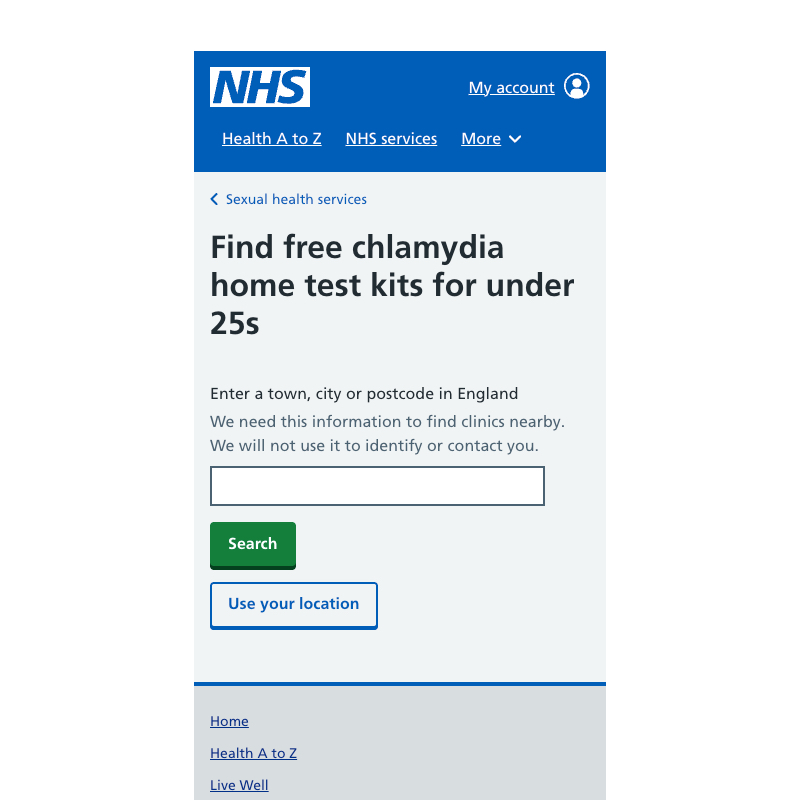
Guiding users to the right sexual health service
Client: NHS Digital
TLDR: Increasing chlamydia testing rates by redesigning content, navigation, and service accessibility to help young people understand and access sexual health services.
Overview
The NHS needed to increase the number of young people getting tested for chlamydia. Users were not finding relevant information, didn't understand it, and were unaware of available services or whether they were eligible.
What I did
- Provided interaction design services within a multidisciplinary team
- Analysed content and information architecture for chlamydia-related pages
- Created Axure and HTML prototypes
- Ran journey mapping workshops
- Collaborated closely with content designers and user researchers
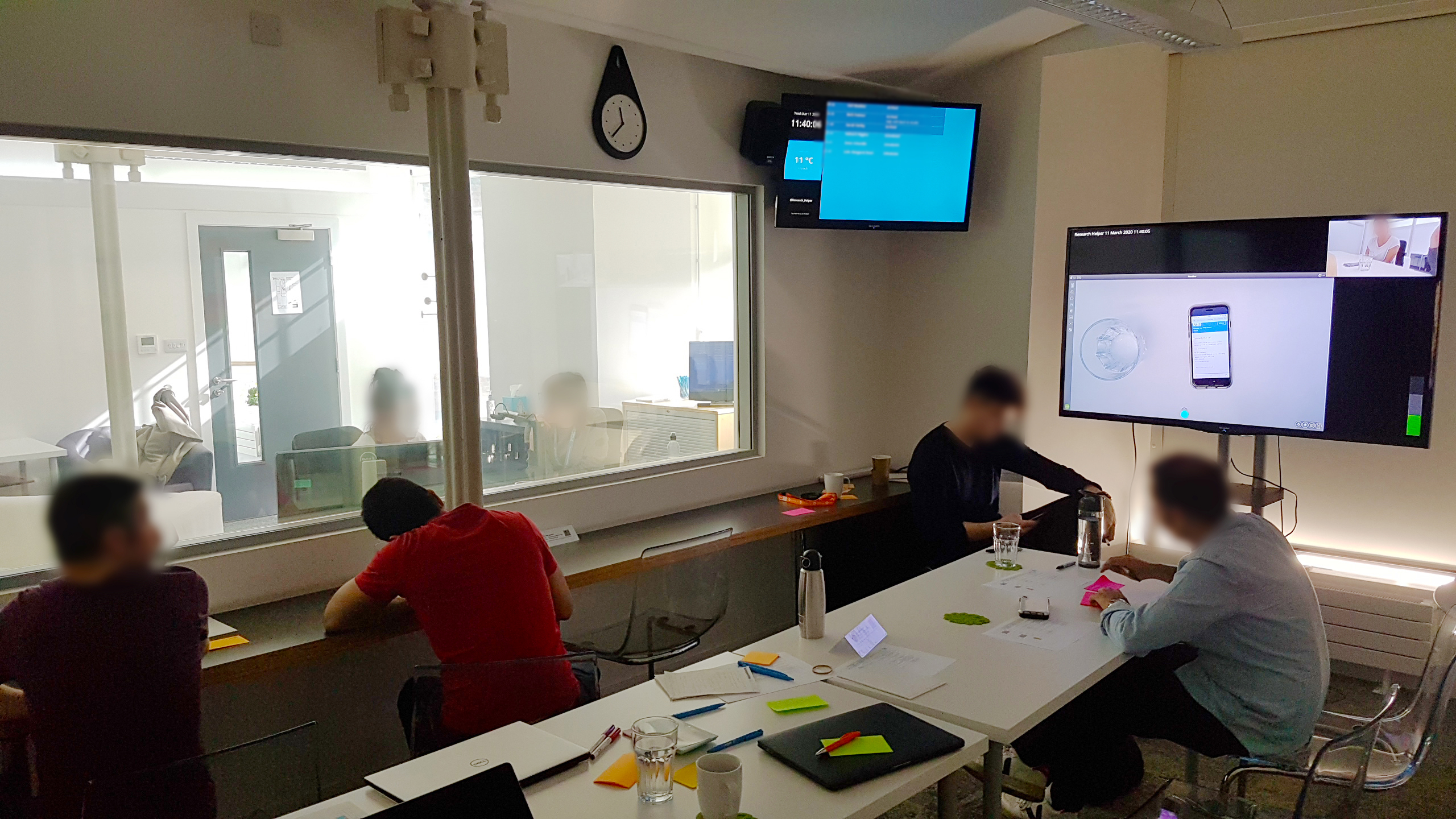
- Conducted popup research, lab sessions, accessibility and inclusivity testing
The problem
Users struggled to find essential information, and when they did, they didn't understand the content or found the tone patronising. The existing digital experience was fragmented, unclear, and exhaustively long. Many users didn't know what testing and treatment services existed or whether they qualified.
The approach
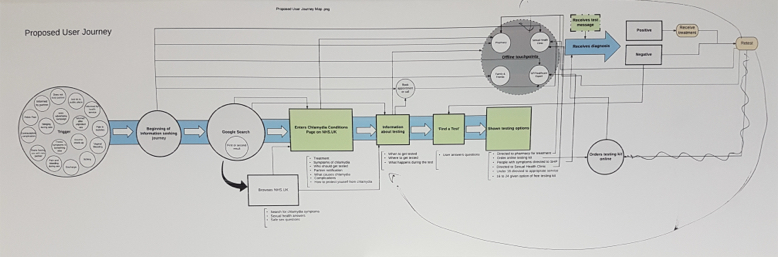
I mapped the full end-to-end journey and co-designed two major improvements:
- clearer, actionable conditions content
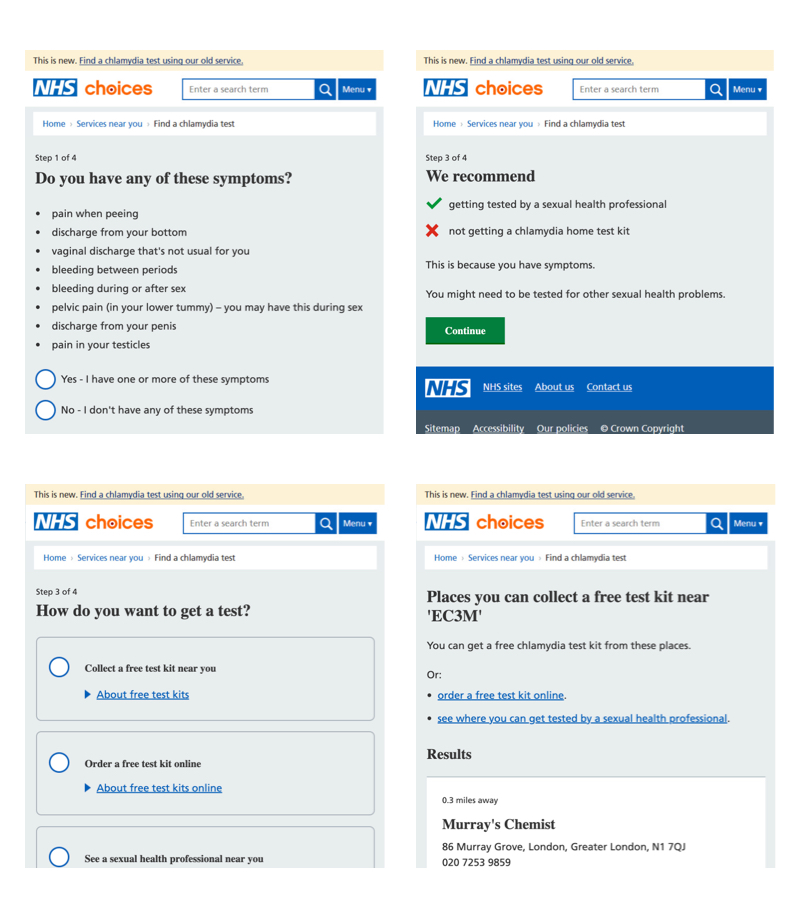
- a tool that directs users to the most appropriate local testing service.
Content was rewritten to be concise, gender-neutral, and inclusive. Multiple rounds of research ensured usability, accessibility, and inclusivity for users with diverse needs.
I developed a tool where users answered questions and then were guided to the appropriate service in their local area.
Outcomes
Users found clearer information, could identify the right service for their needs, and were more likely to choose NHS-preferred testing methods.
This meant fewer users would need to contact their GP and could get the care they needed directly.
Results
- +33% users who felt they found all the information they needed
- +18% chose the NHS-preferred sexual health professional route
- –9.5% reduction in users choosing GPs (least preferred option)
- +67% users who found a suitable service
- Increase from 2% to 28% of at-risk users continued to the 'test finder' tool