
Enabling patients to update their NHS contact details
Client: NHS England
TLDR: Designed and launched a service in 7 months enabling patients to update their NHS contact details themselves, improving data accuracy and saving millions in paper correspondence costs.
Overview
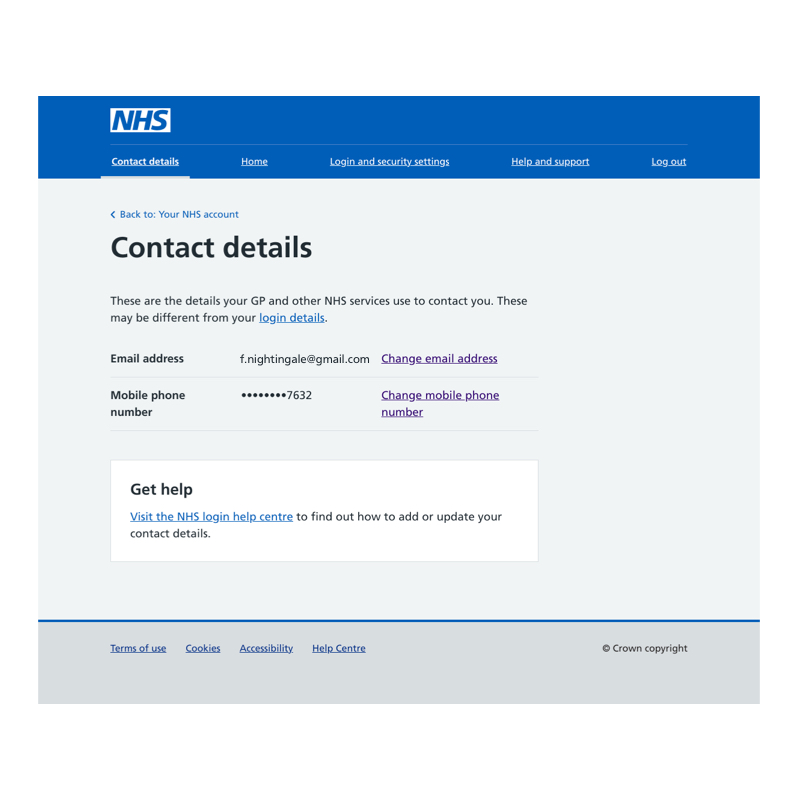
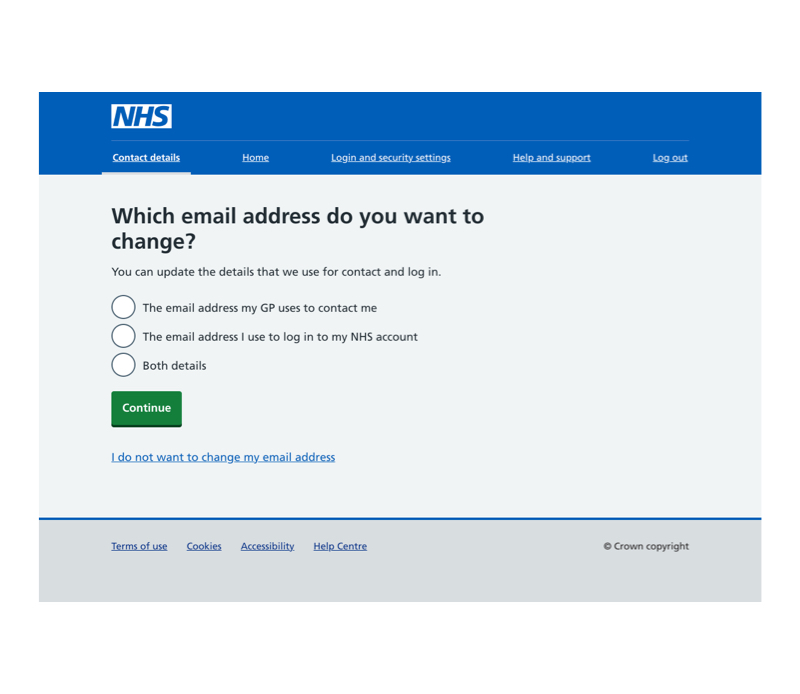
The NHS needed a way for patients to update their own contact details on the national database—a task previously only NHS staff could perform. The goal was to improve data accuracy, reduce operational burden, enable digital communication, and save millions in paper correspondence costs.
What I did
- Analysed discovery findings from a previous NHS team
- Facilitated ideation and solution workshops to define opportunities
- Created hypotheses statements with BA and UR teams
- Built working HTML prototypes using the NHS prototype kit
- Conducted iterative rounds of moderated usability research
- Created service blueprints mapping processes, systems, and policies
- Supported the team through Alpha and Beta phases
- Ensured accessibility and inclusive design throughout
The problem
The national patient database (Personal Demographics Service - PDS) had critical data quality issues. In April 2019, while 80% of records had a mobile number and 25% had an email, none were verified by the NHS. NHS services spent £8m per year on paper and £2m on envelopes, yet couldn't trust the central database. Patients had no way to update their own details or choose communication preferences, and different NHS services maintained conflicting records.
The approach
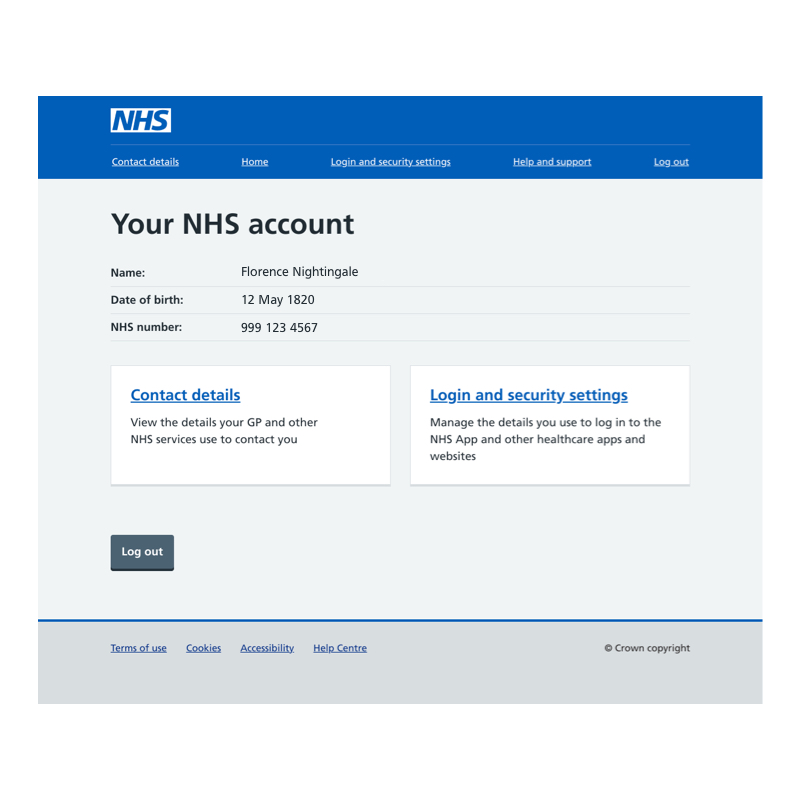
Working within an Agile team, I helped define the problem space and prototype solutions. We hypothesised that NHS login—the emerging authentication service—was the logical place for patients to manage their details. I built HTML prototypes and validated them through popup research in Leeds and lab-based usability testing. When the pandemic hit mid-project, we pivoted to remote research and continued refining the design through private beta with pilot GP surgeries.
Design concepts
Outcomes
This became the first NHS service allowing patients to directly update their national record. Despite pandemic challenges and a team change between Alpha and Beta, the service launched to private beta within seven months and achieved national rollout by January 2021. The work was nominated for an NHS Going the Extra Mile (GEM) award.
Over time as more patients update their contact details, the data quality in PDS will improve.
Results
- 60% conversion rate - of interrupted users, 60% updated their details
- 15,000+ records updated in the first 3 months of private beta
- Only 4-5% dropout once users chose to update
- First-ever patient-driven update to the national patient database
- Enabled future digital communication channels across the NHS
- Potential savings of millions in paper and postage costs annually